Decentralizingthe Divine
How do worship traditions work without a single central authority?
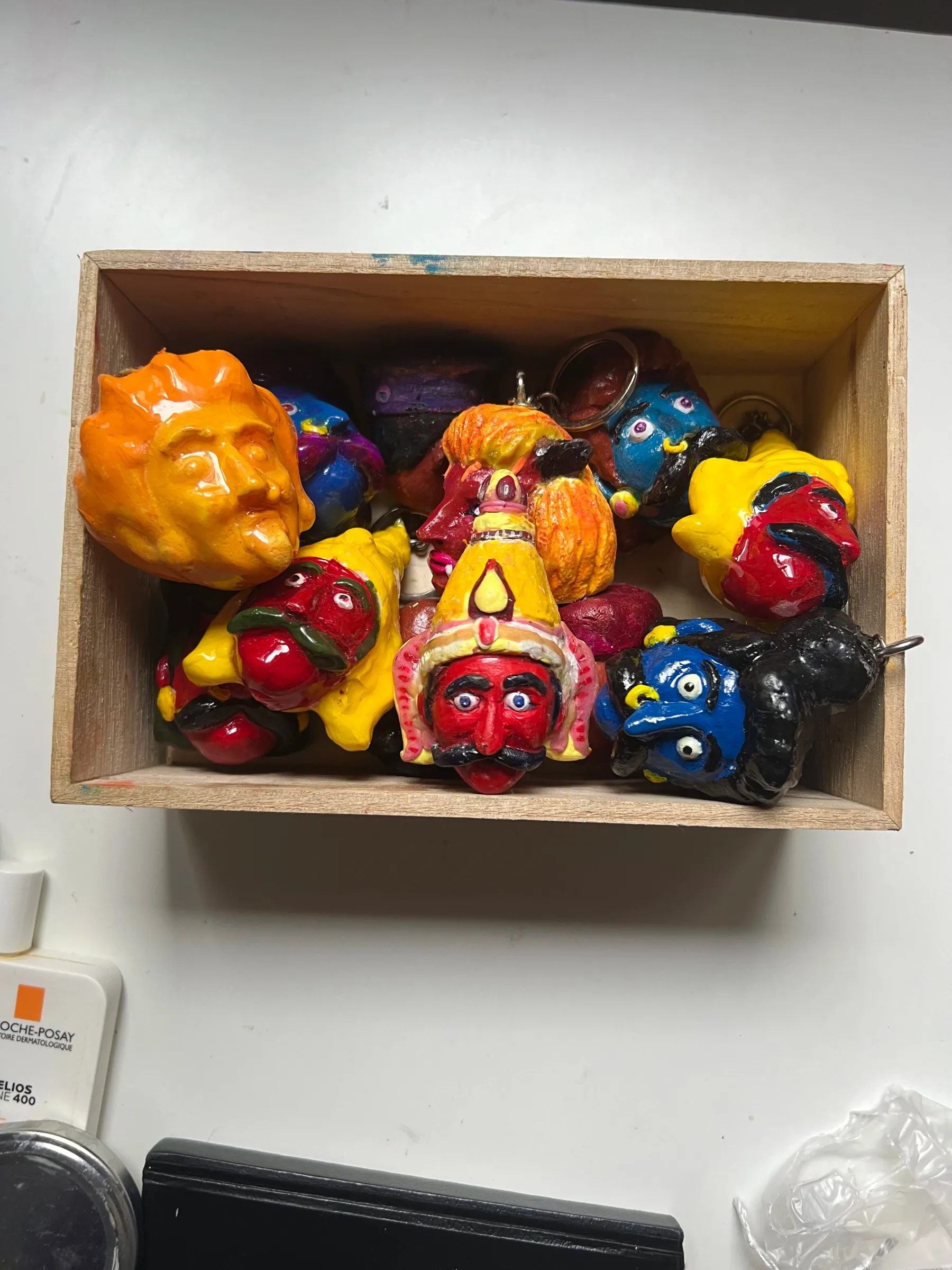
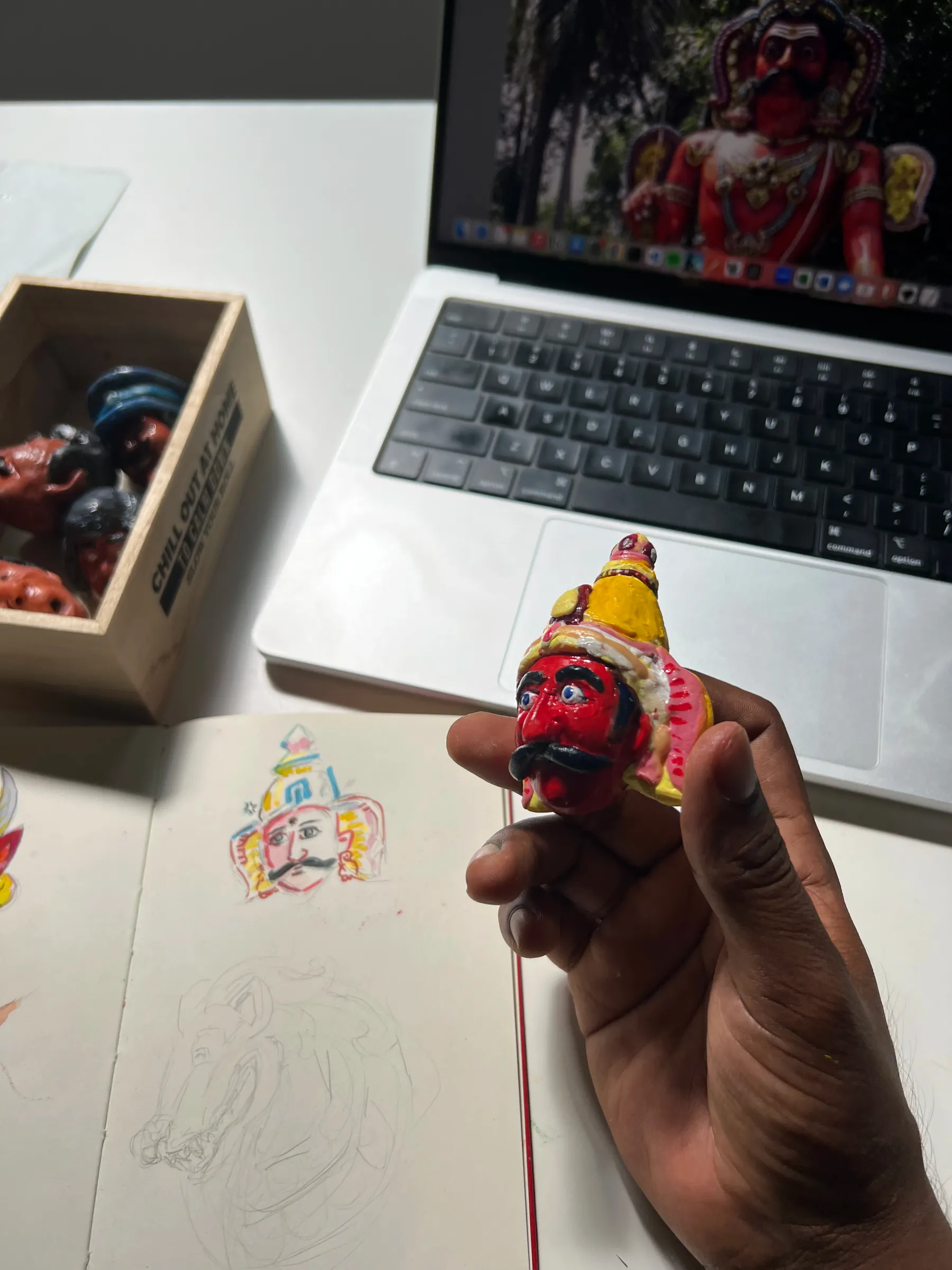
Through this project, I explore Tamil village deities and the ways communities shape their own worship traditions. I’m interested in how these traditions work without a single religious authority, and how this relates to decentralization.
- Subject
- Nattar Deivam நாட்டார் தெய்வம்
- Places
- India, Sri Lanka, Malaysia, Singapore and the Tamil diaspora
- Method
- Documentation and art practice
- Status
- Ongoing
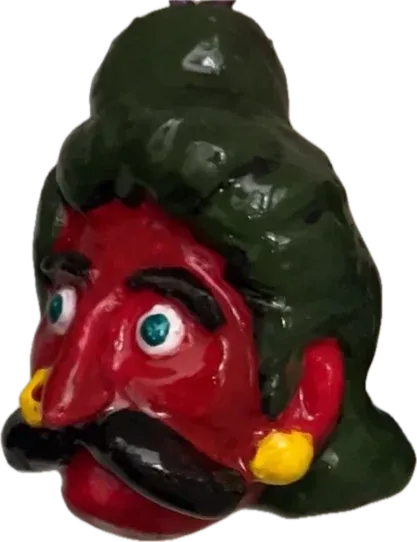
Nattar Deivam நாட்டார் தெய்வம்
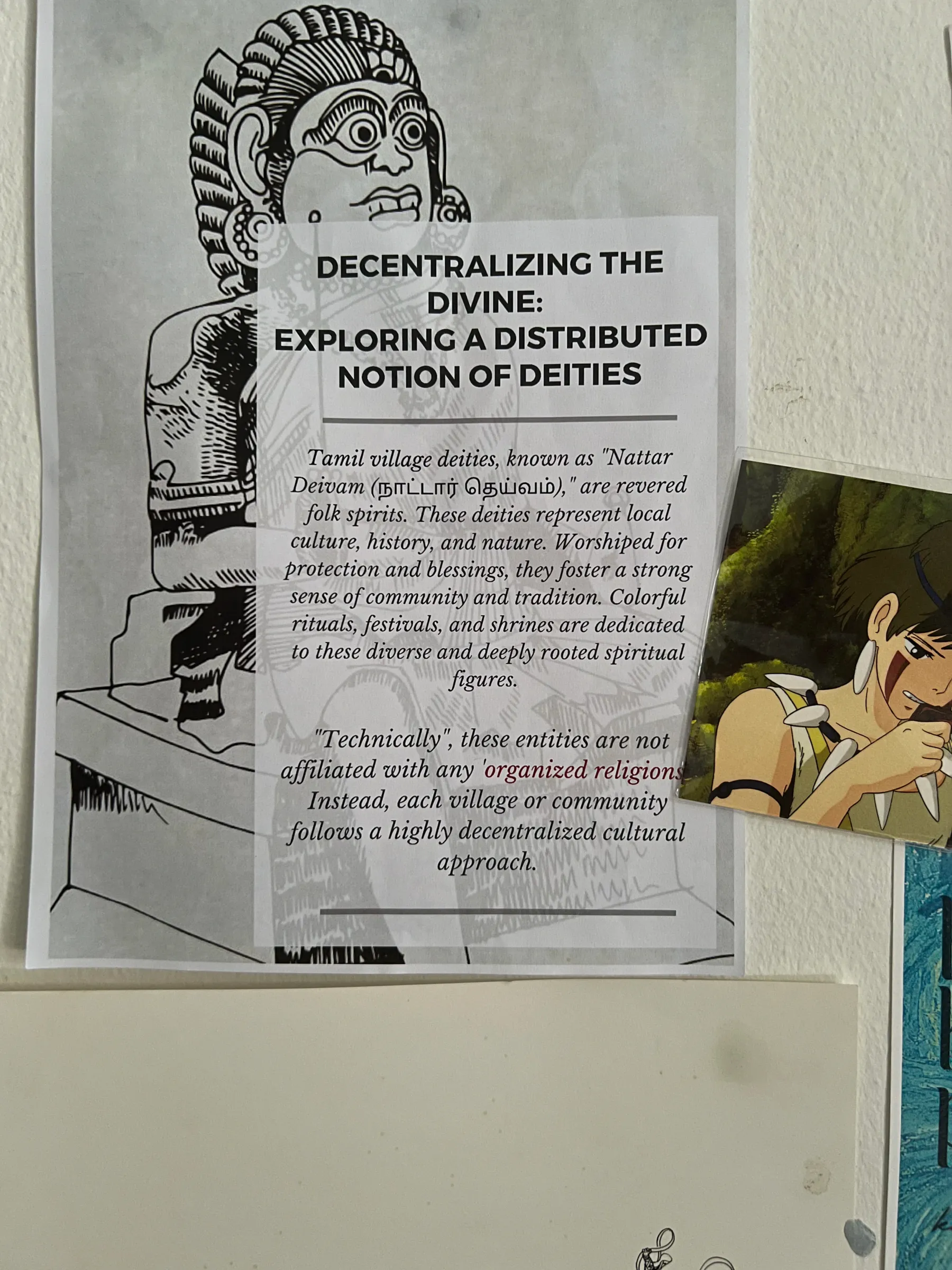
Nattar Deivam (நாட்டார் தெய்வம்) refers to local deities worshipped in Tamil villages. Their stories and worship traditions are closely connected to the history, everyday life, and identity of the communities around them.
Each village has its own deities, rituals, and places of worship. These traditions vary from place to place, shaped by the people who practise them rather than directed by a single central institution.
These local traditions can also overlap with wider religious practices. What interests me is how communities maintain their own customs and relationships with their deities.
A central aim of this project is to document these deities and their worship traditions across India, Sri Lanka, Malaysia, Singapore, and Tamil diaspora communities elsewhere. I want to record the stories, places, and practices associated with them, including what is shared across communities and what is particular to each place.
Alongside this documentation, I explore these questions through my art practice: What can locally shaped worship traditions tell us about decentralization? How might they help us think about communities and systems that are connected but retain their independence?
Places
I am documenting deities, stories, places, and practices in each of these. Entries will be added here as each place is documented.
- IndiaComing
- Sri LankaComing
- MalaysiaComing
- SingaporeComing
- Tamil diaspora elsewhereComing
Books & Research
Books on Tamil village deities and folk traditions that inform this work.
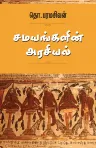 சமயங்களின் அரசியல்Samayangalin Arasiyal
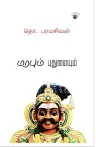 மரபும் புதுமையும்Marabum Puthumaiyum
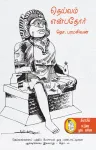 தெய்வம் என்பதோர்Teyvam Enpatoor
 நாஞ்சில் நாட்டு தெய்வங்கள்Nanjil Nattu Deivangal
 தாய்வழிச் சமூகம்Thaivazhi Samoogam
 தெய்வங்கள் முளைக்கும் நிலம்Theivangal Mulaikum Nilam
Reference materials on Tamil folk traditions and village spirituality
Artwork & Process